
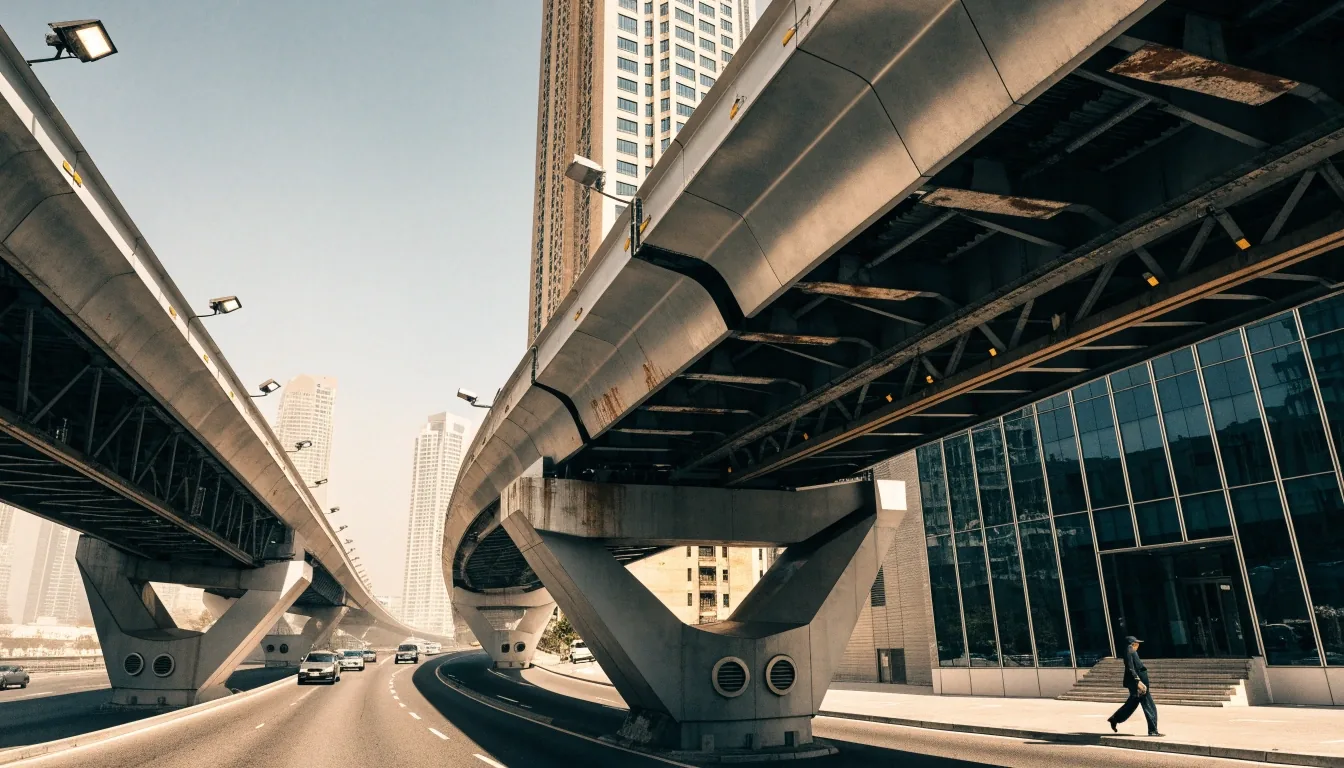
Finding exact building entrances with Makani numbers
Makani is the UAE's smart addressing system, and it solves a problem anyone who has tried to find a building here knows well: the pin lands in the wrong place. Every building gets a unique 10-digit number, and that number takes you to the entrance rather than the general area.
What Makani is
One number that points at the building, not the street
Makani is the UAE's smart addressing system. It assigns each building a unique 10-digit number, and you can search that number on Google and HERE maps to reach the location. The number is tied to the building itself, so it resolves to a doorway rather than an approximate patch of road.
It was designed to make destination-finding easier across the UAE, and it does that by replacing vague directions with a specific identifier. Instead of "near the mall, behind the petrol station", you get a number that resolves to one building. That matters most where street layouts are complicated — service roads, slip lanes, shared access points and towers that share a boundary wall.
The number is not a postcode and it is not a replacement for the street address on a tenancy contract. Think of it as the entrance reference: the thing you hand to a driver, a courier or a friend so they arrive at the right side of the building on the first attempt.
At a glance
- Format
- A unique 10-digit number per building, searchable as plain digits.
- Where it works
- Google Maps and HERE Maps accept the number as a search term.
- What it solves
- The last few hundred metres, where a dropped pin usually fails.
- Who keeps it
- Building management and residents; many businesses display theirs on site.
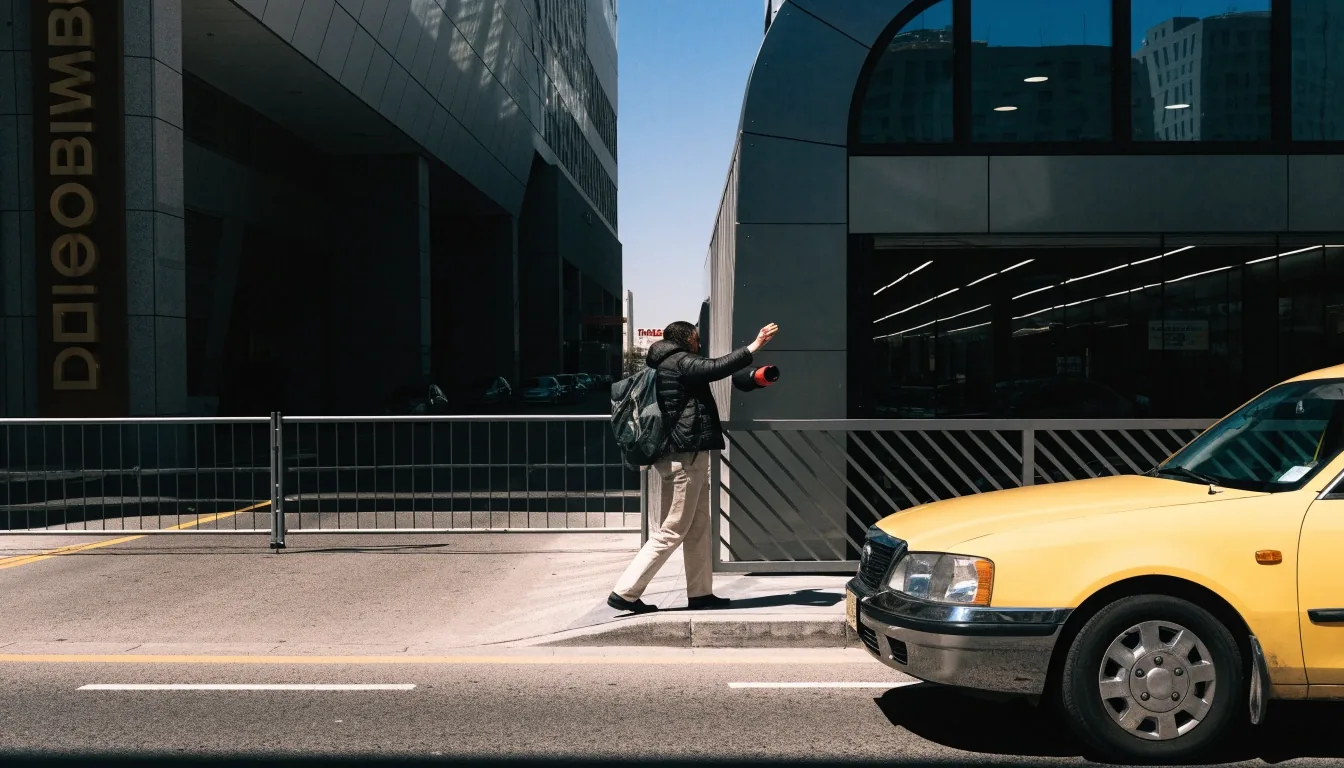
The pin lands on the road, not on the door
Dropped pins have a specific failure mode here: they land on the road nearest to a building rather than the entrance you need. In dense areas with service roads, that can put you on the wrong side of a barrier or on a highway shoulder.
Makani solves this by pointing at the building itself. If a pin keeps sending you to the wrong spot, the number is the fix, not a better description. Written directions break down the moment two towers share a service lane, or when a compound has more than one gate and only one of them is open to visitors. A number removes that ambiguity because it is tied to one structure.
It also helps when the destination has no obvious street address — a villa inside a residential block, a workshop behind a row of showrooms, an office that shares a tower podium with three other entrances. In each case, the entrance is the hard part, and the entrance is exactly what the number identifies.
Finding a Makani number
Ask for the number before you ask for directions
Ask the building or the person you're visiting. Many businesses display their Makani number, and residents often know theirs. If you're sending someone to your location, look up your own building's number and share that instead of a pin.
Once you have the number, search it on Google or HERE maps. It resolves to the building, and you can navigate to it with whatever app you use. Ten digits, entered as a plain search term — no punctuation, no country code, no extra words around it.
Search field · ten digits
Ten digits is the whole address. Paste the number into the search box of your map app and it resolves to the building — the grid above shows the shape of the field, not a real number. Always use the number printed or given to you on site.
Searching it on the map
The number gives you the destination; the app gives you the route
Google and HERE maps both accept Makani numbers as search input. Enter the 10 digits and the map should center on the building. From there, your navigation app takes over with turn-by-turn directions. This works alongside whatever routing app you prefer — you are not locked into one brand to use the number.
The table is a comparison of what each method returns, not a promise about any specific address. Where the building is well known, the district-level result is often good enough. Where it is not, the number is what closes the gap.
The hard part of most trips isn't the highway, it's the last few hundred meters. Makani addresses that directly, because it identifies the building rather than the street.
For deliveries, meeting points and visiting somewhere new, sharing a Makani number removes the back-and-forth. It's a small habit with a large effect on how quickly you arrive.
When to use it, and when a pin is fine
Use the number when the destination is a building, not a district
For a mall, a major landmark or a well-known hotel, a normal map search is usually enough. The entrance is signposted, the car park is obvious, and a district-level result will get you within sight of the door.
For a residential building, an office in a dense block, or anywhere with a service road in front, use Makani. The rule of thumb: if the destination is a specific building rather than a district, the number is more reliable than the pin. If you are already sharing a location with someone, send both — the number covers the entrance and the pin gives a rough sense of the area.
Use the number
Residential towers, offices inside a block, compounds with one open gate, workshops behind showrooms, anywhere with a service road in front.
A pin is fine
Malls, stadiums, major hotels, airport terminals and any landmark with signed, obvious entrances off a main road.
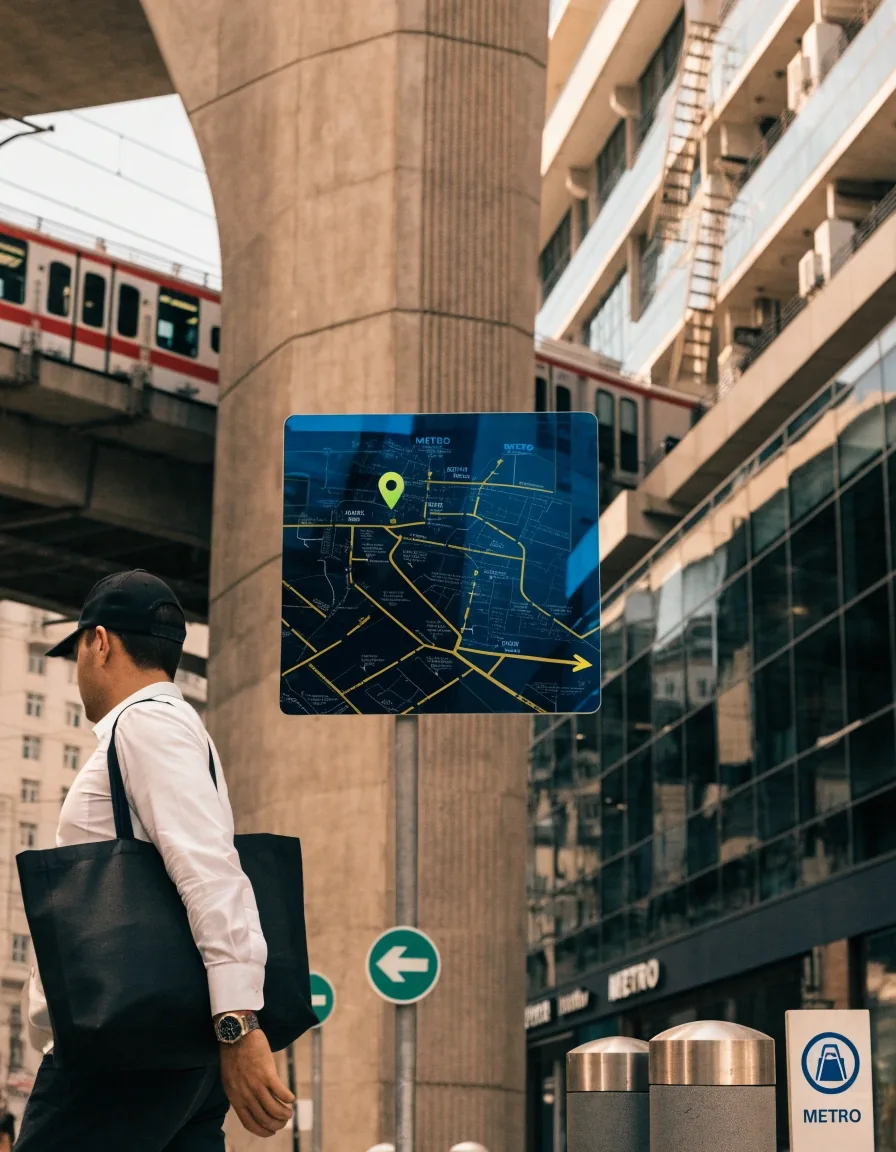
The last hundred metres decide the trip
Sharing locations properly
Send the number alongside the pin
If you're sending your location to a driver or a courier, send the Makani number alongside the pin. The number covers the entrance; the pin gives a rough sense of the area. Together they remove most confusion, and they take about ten extra seconds to share.
If you don't know your building's number, it's worth finding out. It's the kind of detail that pays off the first time someone can't find you — and it saves you the phone call where you describe which side of the building they should be on. Ask building management, check whether the number is displayed on the premises, or ask a neighbour who has lived there longer than you have.
Keep it somewhere easy to reach, like a note on your phone or a saved contact entry for your own address. When a delivery arrives at the wrong gate, you can forward the number instead of repeating directions.
Common questions about Makani
How does Makani work?
Where do I find my Makani number?
Is Makani better than a map pin?
Does the number replace the street address?
Put the number into your routine
Find your own building's number this week and save it with your address. Then the next time someone is circling the block, you send ten digits instead of a paragraph of directions.
Sakilis publishes practical English-language guidance for driving and multimodal travel across the UAE. Questions about this guide? Office 1403, Al Shatha Tower, Sheikh Zayed Road, Dubai — Monday to Friday, 9:00 AM to 6:00 PM.